What's the difference between concrete flatwork and other concrete jobs?
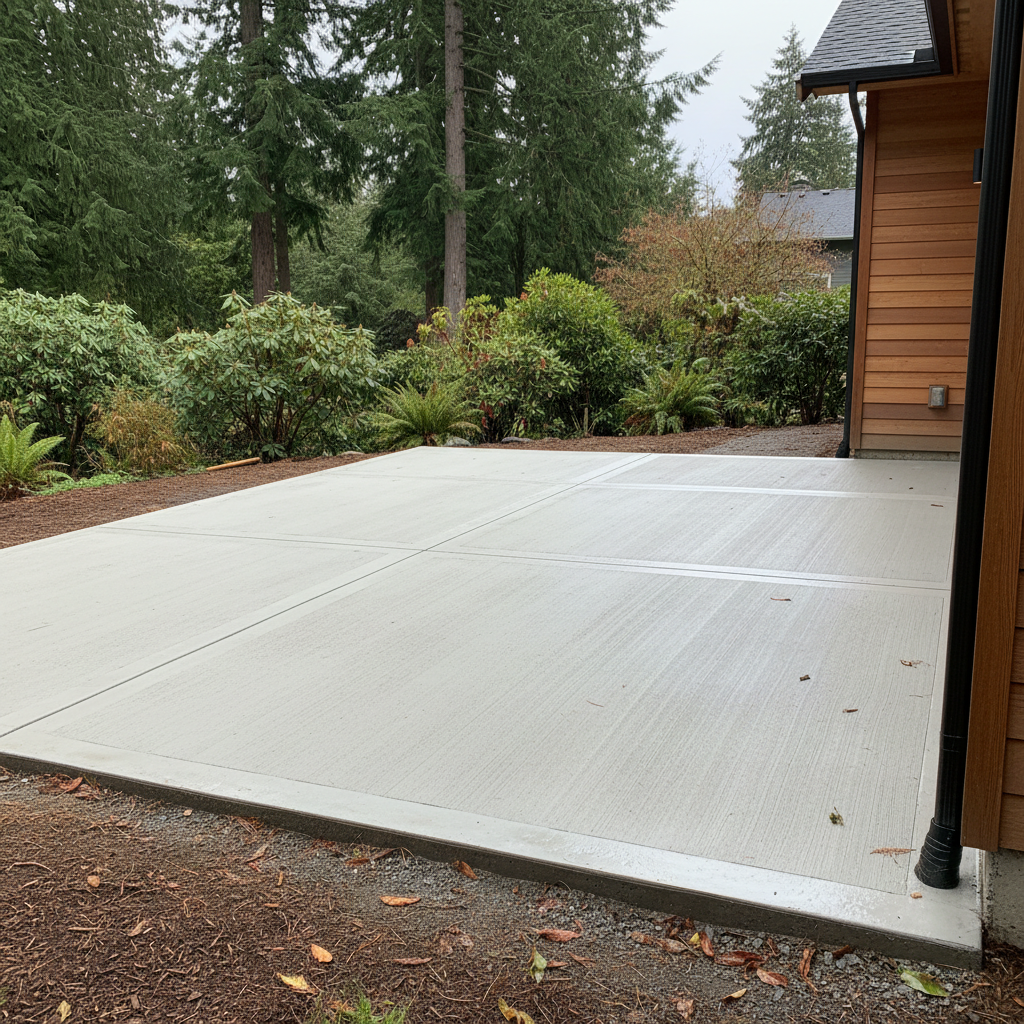
When I talk about concrete flatwork, I'm generally referring to any large, relatively flat surface made of concrete. Think driveways, patios, walkways, garage floors, basement slabs, and even pool decks. It's distinct from things like concrete retaining walls, which are structural and vertical, or decorative elements like concrete countertops. Flatwork is all about creating those essential, durable surfaces around your home that you walk or drive on every single day. It's got to be tough, handle the elements, and look good doing it.
How long does a new concrete driveway or patio typically last in Bothell?
A well-installed concrete driveway or patio, done right from the start, should easily last 25 to 30 years, sometimes even longer. I've seen some older driveways in areas like Canyon Park that are still holding up after 40 years, though they might show their age a bit. The key is proper site preparation – getting the subgrade right, good drainage, and using the correct mix for our Puget Sound climate. Our freeze-thaw cycles aren't as extreme as some places, but we get plenty of rain, which can be tough on concrete if it's not sealed or if the water can't drain away properly. Regular maintenance, like sealing every few years, also plays a huge role in extending its life.
What causes cracks in concrete, and are they always a problem?
Cracks are almost inevitable in concrete; it's just the nature of the material. Concrete shrinks as it dries and cures, and that shrinkage creates stress. Control joints are put in specifically to give the concrete a place to crack in a controlled, less visible way. If you see a straight crack running along a control joint, that's usually not a big deal. Hairline cracks that are barely visible are also pretty common and generally harmless. The cracks you need to worry about are those that are wide (say, wider than a credit card), uneven, or show significant vertical displacement – meaning one side is higher than the other. Those can indicate a problem with the subgrade, water issues, or improper installation, and they can worsen over time, letting water penetrate and cause more damage. If you're seeing those kinds of cracks, it's worth having someone take a look.
Do I really need to seal my concrete flatwork, and how often?
Absolutely, you should seal your concrete flatwork, especially here in Bothell. I can't stress this enough. Sealing is like putting a raincoat on your concrete. It protects it from moisture penetration, which is a big deal with all the rain we get. It also helps prevent staining from oil, rust, and organic growth, and it protects against surface wear and tear. For driveways and high-traffic patios, I usually recommend sealing every 2-3 years. For walkways or less-used areas, you might get away with 3-5 years. It's a relatively inexpensive maintenance step that pays huge dividends in extending the life and appearance of your concrete. Don't skip it.
What's the typical process for a new concrete driveway installation?
Okay, so for a new driveway, it's a multi-step process, and each step is critical. First, we'll do the excavation and site prep. This means removing existing material, grading the area to ensure proper drainage away from your house, and compacting the subgrade. A solid, stable base is non-negotiable. Next, we'll install a gravel base, usually 4-6 inches thick, and compact that too. Then comes the formwork – setting up the wooden or metal forms that define the shape and height of the driveway. We'll also install any necessary rebar or wire mesh for reinforcement. After that, it's the fun part: pouring the concrete. We'll use a specific mix designed for our climate, place it, screed it to level, and then float and trowel it to get the desired finish. Finally, we cut the control joints and then the concrete cures. It's a lot of work, but doing it right means you get a driveway that lasts.
Can I pour new concrete over existing concrete?
Sometimes, but it's usually not the best long-term solution. Pouring a new layer of concrete, often called an overlay or topping, over old concrete can work if the existing slab is in relatively good shape – meaning it's stable, not severely cracked, and has good drainage underneath. The new layer needs to be at least 2 inches thick, and we'd have to prepare the old surface properly by cleaning it thoroughly and applying a bonding agent. The big risk is that any movement or cracks in the old slab will eventually reflect through to the new top layer. If the old concrete is badly damaged, heaving, or has significant drainage issues, then a full tear-out and replacement is almost always the smarter investment. You don't want to just put a band-aid on a bigger problem; that'll cost you more in the long run. At Sunrise Concrete Solutions, we're always upfront about what we think is the best approach for your specific situation.