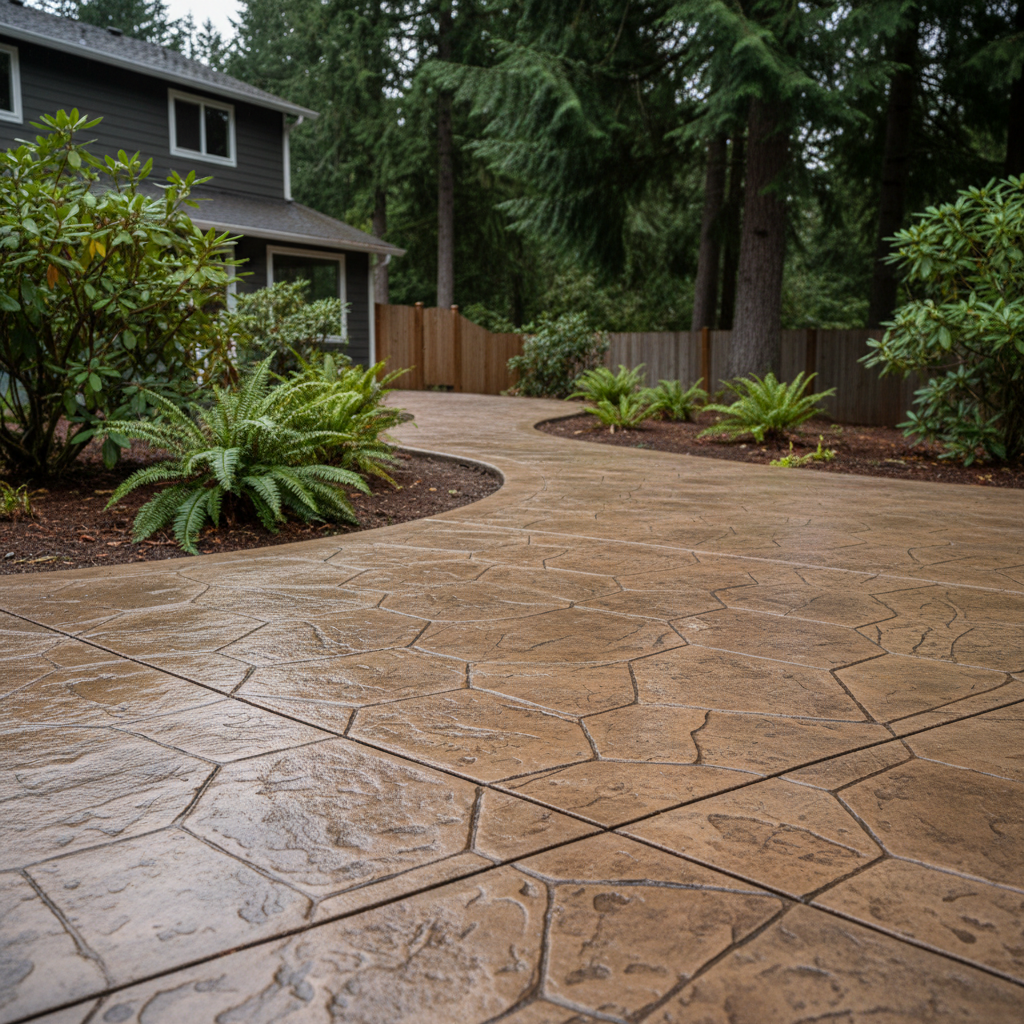
So, you've got stamped concrete, right? Maybe it's a patio, a walkway, or even your driveway. It looks fantastic when it's new, but I've seen plenty of folks around Bothell let their investment go downhill because they didn't know how to take care of it. It's not rocket science, but there are a few things you really need to do, especially with our Pacific Northwest weather trying its best to wear everything down.
Why Your Stamped Concrete Needs Maintenance
Look, stamped concrete isn't just a pretty face. It's tough, but it's not invincible. The biggest enemies here in Bothell, and really anywhere, are water and UV rays. Our damp climate means moss and mildew love to set up shop, and those constant freeze-thaw cycles we get in winter can really mess with surfaces if they're not sealed right. Proper maintenance isn't just about keeping it looking good; it's about protecting the concrete's integrity itself. This prevents cracks, fading, and surface degradation.
Regular Maintenance: What You Should Do
This isn't a daily chore, but it's not a 'set it and forget it' deal either. Here's what I tell my clients:
Keep it Clean: This is probably the easiest and most overlooked step. Sweep off leaves, dirt, and debris regularly. If you let organic matter sit, especially in the shady spots common in neighborhoods like Canyon Park, it holds moisture. That's an open invitation for moss and mildew. For tougher grime, a garden hose with a good nozzle and a stiff brush usually does the trick. If things are really stubborn, you can use a mild detergent – nothing too harsh, just a little dish soap or a concrete-specific cleaner. Pressure washing is okay, but be careful. Keep the nozzle moving and don't get too close, especially with an industrial-strength washer. You don't want to blast away the sealer or even chip the concrete, do you?
Re-Sealing is Crucial: This is the big one. The sealer is your stamped concrete's protective shield. It's what gives it that vibrant color, protects it from stains, and most importantly, keeps water from penetrating the surface. In Bothell, with our rain and occasional snow, I recommend re-sealing every 2-3 years. You might get away with 3-4 years if it's a low-traffic area and out of direct sun, but don't push it. You'll know it's time when water stops beading up on the surface and starts soaking in. Before you re-seal, the surface needs to be absolutely clean and dry. Any dirt or moisture trapped under the new sealer will cause problems down the road.
Deal with Stains Immediately: Spills happen. Oil, grease, rust, even just a spilled drink. The quicker you get to them, the easier they are to clean. For oil or grease, an absorbent material like cat litter or sawdust can help soak up the fresh spill. Then, use a stiff brush and a degreaser. For rust, there are specific rust removers for concrete. Just make sure whatever you use is safe for sealed concrete and always test it in an inconspicuous spot first.
Warning Signs: When to Pay Closer Attention
Your concrete will tell you when it's not happy. You just need to know what to look for:
Fading Color: If your vibrant patio starts looking dull or washed out, that's a sure sign your sealer is wearing thin and UV rays are getting to the color. Time to re-seal, pronto.
Surface Flaking or Peeling: This usually means the sealer wasn't applied correctly, or it's just completely worn out and the concrete itself is starting to degrade. It can also be a sign of moisture issues underneath.
Cracks: Small hairline cracks are sometimes unavoidable, especially with our shifting clay soils in some parts of Bothell. But if you see cracks widening, or new, longer cracks appearing, that's a bigger issue. It could be a sub-base problem, freeze-thaw damage, or even tree roots. Don't ignore these.
Moss or Mildew Growth: A little bit of green in a damp corner might just need a good scrub. But if it's widespread and keeps coming back quickly after cleaning, it means your surface is staying wet too long, likely due to a compromised sealer.
When to Call a Professional (Like Sunrise Concrete Solutions)
While a lot of maintenance is DIY-friendly, there are times you absolutely need a pro. If you're seeing:
Significant cracking or pitting: We're talking more than just hairline stuff. This often requires repair work that's beyond a simple patch job.
Extensive sealer failure: If your sealer is peeling or delaminating over a large area, just slapping more sealer on top won't fix it. The old sealer often needs to be stripped first, and that's a messy, specialized job.
Persistent staining that won't come out: Some stains penetrate deep, and you need industrial-grade cleaners or even grinding to remove them without damaging the concrete.
You're just not comfortable doing it yourself: Hey, I get it. Not everyone wants to spend a weekend scrubbing and sealing. That's what we're here for. We've got the right equipment, the right products, and the know-how to get it done right.
Taking care of your stamped concrete isn't just about looks; it's about protecting your investment. A little bit of effort now will save you a lot of headaches and money down the road. Keep it clean, keep it sealed, and keep an eye out for those warning signs. Your beautiful concrete will thank you for it.