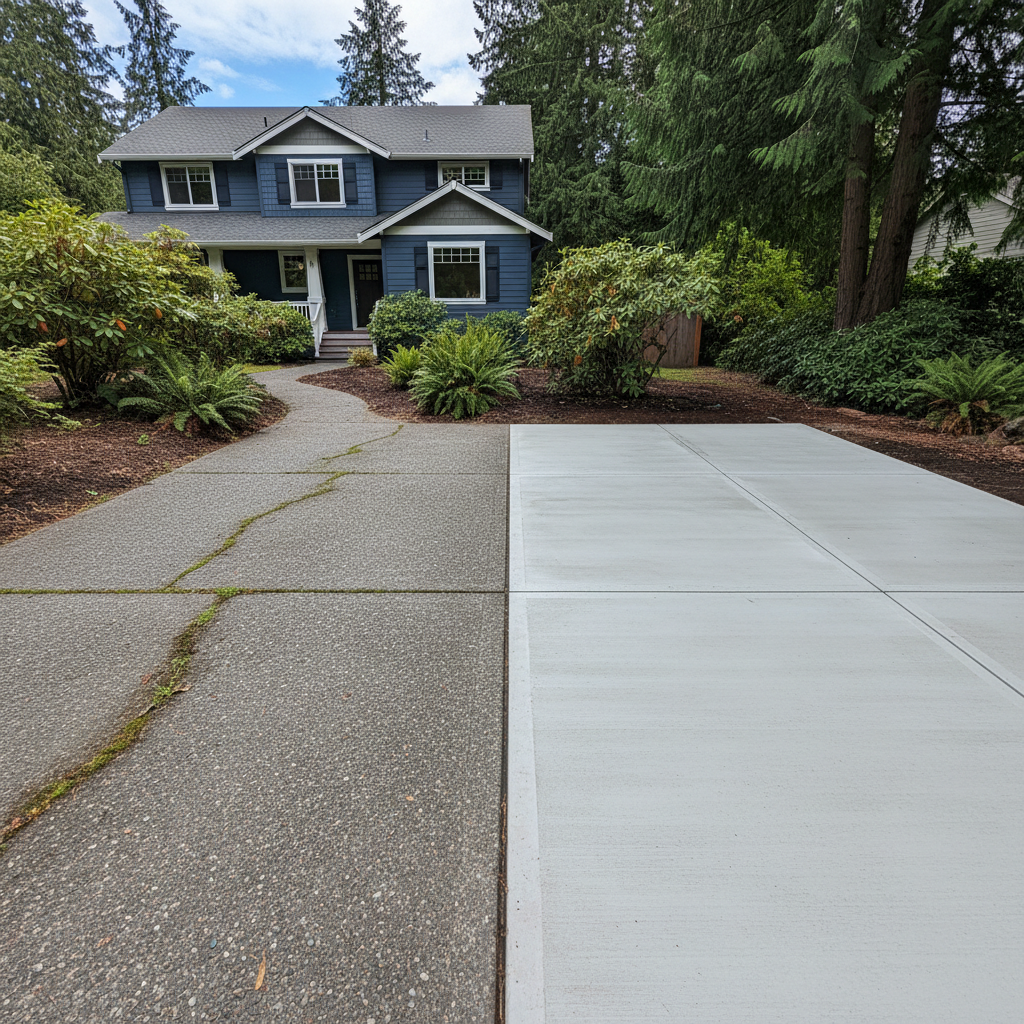
Choosing between a poured concrete slab and interlocking pavers for your next outdoor project comes down to more than just initial looks. You have to think about how our local environment is going to treat that surface over the next 15 to 20 years or more. Around Bothell, we deal with heavy winter rains, soggy clay-heavy soils, and plenty of moisture that tests outdoor building materials to their limits.
Here is a straightforward look at how poured concrete flatwork compares to concrete pavers when you install them right here in Western Washington.
Upfront Costs and Installation Time
When you are budgeting for a patio or walkway, money talks. A standard poured concrete slab usually takes less time to install and costs less upfront per square foot than a proper paver installation. Pavers require extensive base preparation, heavy excavation, edge restraints, and meticulous hand-laying of every single block. With concrete, Sunrise Concrete Solutions forms up the area, pours the mix, and finishes the surface in a fraction of the time. If keeping initial costs down is your main goal, monolithic concrete flatwork wins this round.
Handling Soil Movement and Weather
Here is where our local soil conditions make a big difference. Bothell yards often sit on glacial till or dense clay that holds water and shifts as it freezes and thaws through the winter months.
- Poured concrete is rigid. When the ground underneath moves, a monolithic slab can crack if the sub-base was not prepped with enough crushed rock or if tree roots push up from below.
- Pavers are modular. They have flexible joints filled with polymeric sand, meaning the individual units can shift slightly with the earth without cracking or breaking apart.
If your project is going over an area with known drainage quirks or unstable soil, that flexibility gives pavers a distinct structural advantage over the long haul.
Maintenance Realities
People often think concrete is totally maintenance-free, but that is a myth. A poured slab needs periodic cleaning and fresh sealer every few years to keep water from penetrating and causing surface flaking during freeze cycles. Pavers, on the other hand, require a different kind of upkeep. You will occasionally need to deal with moss growth in the damp shade, touch up the joint sand, or pull the occasional weed that finds a home in the cracks. That said, if a heavy object drops and shatters a section of poured concrete, patching it cleanly is nearly impossible. If a paver cracks or stains badly, you just pull that single unit out and drop a new one in.
Our Recommendation for Bothell Homes
Sunrise Concrete Solutions pours a lot of concrete, but we always tell homeowners to pick the material that fits how they actually use their space. If you want a smooth, even surface for rolling a garbage can, setting heavy furniture, or shooting hoops on a driveway, poured flatwork is unbeatable. But if you are putting in a backyard patio over tricky soil where you want zero risk of major cracking, pavers or a well-engineered slab with extra gravel depth will save you headaches down the road. Weigh your priorities, look at your drainage, and choose the option built to survive our Northwest winters.